


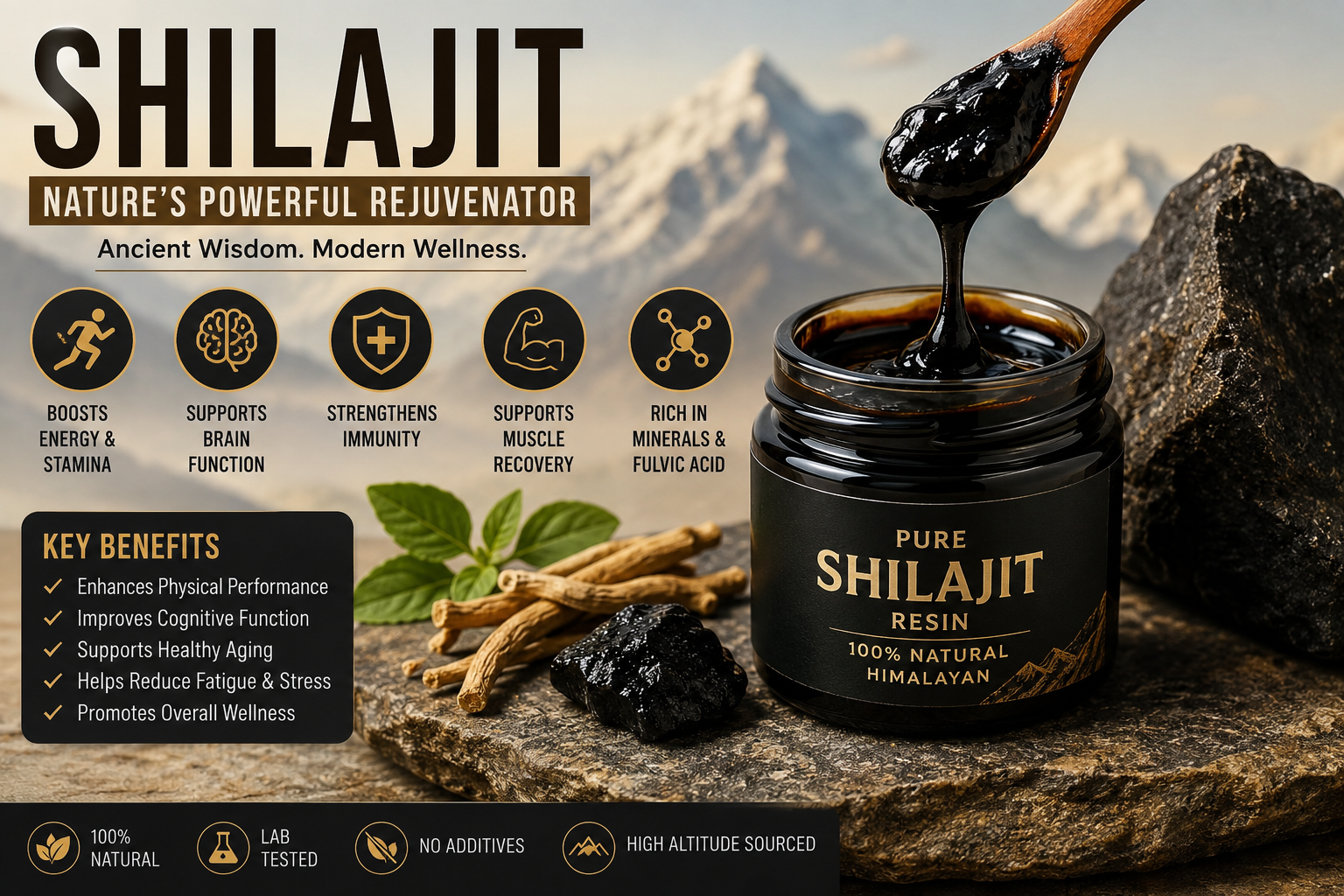
Shilajit has become one of the most talked-about natural supplements in the world. From professional athletes and fitness enthusiasts to people interested in Ayurveda, many are turning to this ancient mineral-rich substance for better energy, stamina, and overall health.
For thousands of years, Shilajit has been used in Ayurvedic medicine as a rejuvenating tonic. Modern research has also begun to explore its potential benefits, particularly its rich content of fulvic acid, minerals, and antioxidants. While early findings are promising, not every claimed benefit has strong clinical evidence, so it is important to separate tradition from science.
Whether you are considering Shilajit for improved vitality, cognitive support, or general wellness, understanding how it works, how to use it safely, and how to choose a high-quality product is essential
What You’ll Learn
In this guide, you’ll discover:
- What Shilajit is and how it forms
- Different types of Shilajit
- Proven health benefits
- Scientific evidence behind its use
- Dosage recommendations
- Possible side effects
- Who should avoid Shilajit
- How to identify pure Shilajit
- Best ways to consume it
- Frequently asked questions
What Is Shilajit?
Definition (Featured Snippet):
Shilajit is a natural, mineral-rich substance that slowly forms over centuries from decomposed plant material trapped within mountain rocks. It is commonly found in the Himalayas and contains fulvic acid, humic substances, trace minerals, and bioactive compounds that have been used in traditional Ayurvedic medicine to support overall health and vitality.
Shilajit appears as a sticky, dark brown or black resin. During warm weather, it naturally oozes from cracks in mountain rocks.
Because it develops over hundreds to thousands of years, it is considered one of nature’s most unique nutritional substances.
How Is Shilajit Formed?
Unlike herbs, Shilajit is not a plant.
It develops through a natural geological process involving:
- Mountain plants
- Mosses
- Microorganisms
- High pressure
- Warm temperatures
- Mineral-rich rocks
Over centuries, these materials slowly break down and become enriched with minerals, eventually forming the resin known as Shilajit.
Nutritional Composition of Shilajit
The exact composition varies depending on the source, but purified Shilajit typically contains:
| Compound | Purpose |
|---|---|
| Fulvic Acid | Enhances nutrient transport and acts as an antioxidant |
| Humic Acid | Supports soil-derived mineral content and may contribute to antioxidant activity |
| Iron | Supports healthy red blood cells |
| Magnesium | Muscle and nerve function |
| Zinc | Immune support |
| Potassium | Electrolyte balance |
| Calcium | Bone health |
| Selenium | Antioxidant support |
| Copper | Energy production |
| Amino Acids | Building blocks of proteins |
More than 80 trace minerals have been identified in purified Shilajit, though amounts vary by source and purification process.
Types of Shilajit
1. Himalayan Shilajit
The most popular variety, traditionally harvested from the Himalayan mountain range. It is widely used in Ayurvedic preparations.
Advantages
- Rich mineral profile
- High fulvic acid content (varies by product)
- Traditional use spanning centuries
2. Altai Shilajit
Collected from the Altai Mountains.
Known for:
- Dark resin texture
- Naturally occurring minerals
- Cold climate origin
3. Russian Shilajit
Harvested from mountain regions in Russia.
Often marketed for:
- Athletic performance
- Energy
- Recovery
Scientific comparisons between regions remain limited.
4. Asphalt-Based Fake Products
Many low-quality products imitate real Shilajit.
These often contain:
- Artificial colors
- Asphalt-like substances
- Fillers
- Heavy metals
- Sugar additives
Always buy purified and lab-tested Shilajit from reputable manufacturers.
Top Science-Backed Benefits of Shilajit
1. Supports Natural Energy Production
One of the most common reasons people take Shilajit is to combat tiredness.
Fulvic acid may support the body’s natural energy production by helping mitochondria—the “powerhouses” of cells—function efficiently. While some studies suggest benefits for reducing fatigue, larger human trials are still needed.
Possible Benefits
- Improved stamina
- Better endurance
- Reduced fatigue
- Enhanced recovery after exercise
2. Rich Source of Antioxidants
Oxidative stress contributes to aging and many chronic diseases.
Shilajit contains antioxidants that may help protect cells from damage caused by free radicals.
Potential benefits include:
- Healthy aging
- Cellular protection
- Immune support
- Reduced oxidative stress
3. May Support Brain Health
Some laboratory studies suggest fulvic acid may help protect nerve cells and support healthy brain function. Researchers are investigating its potential role in neurodegenerative diseases, but evidence in humans is still limited.
Possible cognitive benefits include:
- Better focus
- Improved memory
- Mental clarity
- Healthy aging
4. Supports Healthy Testosterone Levels
Several clinical studies have explored the effect of purified Shilajit on male reproductive health. Some have reported improvements in testosterone levels and sperm quality in certain groups of men, but results may not apply to everyone.
Potential benefits:
- Healthy hormone balance
- Improved vitality
- Better reproductive health
5. Exercise Recovery
Athletes sometimes use Shilajit as part of their recovery routine.
It may help:
- Reduce exercise-related fatigue
- Support muscle recovery
- Improve endurance when combined with proper nutrition and training
6. May Support Healthy Aging
In Ayurveda, Shilajit is traditionally classified as a rejuvenating substance (Rasayana).
Its antioxidant properties and mineral content may contribute to:
- Cellular health
- Energy
- General wellness
- Healthy aging
(Part 2 will continue with dosage, side effects, how to choose pure Shilajit, comparisons, buyer’s guide, FAQs, schema markup, visual recommendations, internal linking strategy, and final SEO audit.)
Part t continue
Shilajit Dosage, Side Effects, Buying Guide & FAQs (Part 2)
How to Use Shilajit
Shilajit is available in several forms. The best choice depends on your lifestyle and preferences.
| Form | Pros | Cons | Best For |
|---|---|---|---|
| Resin | Least processed, traditionally used | Requires measuring | Experienced users |
| Capsules | Convenient, pre-measured | May contain fillers | Beginners |
| Powder | Easy to mix | Taste varies | Smoothies and drinks |
| Liquid Extract | Easy to consume | Quality varies | Travelers |
Expert Tip: If possible, choose purified resin from a reputable brand with third-party laboratory testing.
Recommended Shilajit Dosage
There is no universal dosage suitable for everyone. The right amount depends on the product, concentration, age, and individual health.
General Guidelines
| User | Suggested Daily Amount* |
|---|---|
| Beginners | 100–250 mg |
| Regular users | 250–500 mg |
| Advanced users | Follow product label or healthcare advice |
*These are general guidelines. Always follow the manufacturer’s instructions and consult a healthcare professional, especially if you have a medical condition or take prescription medications.
Best Time to Take Shilajit
Many people prefer taking Shilajit:
- In the morning
- On an empty stomach (if tolerated)
- Before exercise
- With warm water or milk
Avoid taking it late at night if you find it increases your alertness.
How to Take Shilajit Resin
Step-by-Step Guide
- Take a pea-sized amount of resin.
- Dissolve it in warm water, milk, or herbal tea.
- Stir until fully dissolved.
- Drink immediately.
- Use consistently according to the product directions.
Shilajit Benefits for Men
Research has explored Shilajit’s role in men’s health, but more high-quality studies are needed.
Potential benefits include:
- Supports natural energy levels
- May help maintain healthy testosterone in some men
- May support sperm health
- Supports exercise recovery
- Helps reduce tiredness
Shilajit Benefits for Women
Women also use Shilajit as part of their wellness routine.
Potential benefits include:
- Supports daily energy
- Provides trace minerals
- May support healthy aging through antioxidant activity
- May help overall vitality
Note: Pregnant and breastfeeding women should avoid Shilajit unless advised by a qualified healthcare provider.
Potential Side Effects of Shilajit
Purified Shilajit is generally well tolerated by many healthy adults when used as directed. However, side effects are possible.
These may include:
- Upset stomach
- Nausea
- Dizziness
- Allergic reactions (rare)
Unpurified Shilajit may contain contaminants such as heavy metals or other impurities. This is why purchasing a tested and purified product is important.
Who Should Avoid Shilajit?
Speak with a healthcare professional before using Shilajit if you:
- Are pregnant or breastfeeding
- Have gout
- Have hemochromatosis (high iron levels)
- Have chronic kidney disease
- Take medications for diabetes or blood pressure
- Have any serious medical condition
How to Identify Pure Shilajit
Because the market contains counterfeit products, choosing authentic Shilajit is essential.
Signs of Genuine Shilajit
 Very cheap price Strong chemical smell Contains fillers or additives No Certificate of Analysis (COA) No information about purification or testing
Shilajit vs Ashwagandha
| Feature | Shilajit | Ashwagandha |
|---|---|---|
| Source | Mineral-rich resin | Ayurvedic herb |
| Primary Use | Energy, vitality | Stress management |
| Main Active Compounds | Fulvic acid, minerals | Withanolides |
| Traditional Use | Rasayana (rejuvenation) | Adaptogen |
| Common Forms | Resin, capsules | Powder, capsules |
These supplements serve different purposes and are sometimes used together under professional guidance.
How to Store Shilajit
Proper storage helps preserve quality.
- Keep the container tightly closed.
- Store in a cool, dry place.
- Avoid direct sunlight.
- Keep away from moisture.
- Keep out of reach of children.
Buying Guide: How to Choose the Best Shilajit
Before buying, check the following:
- Third-party laboratory testing
- Purified product
- Clear ingredient list
- Certificate of Analysis (COA), if available
- Transparent sourcing
- Positive customer reviews from reliable platforms
- Appropriate packaging to protect the product
Avoid products that make unrealistic health claims or promise to cure diseases.


