


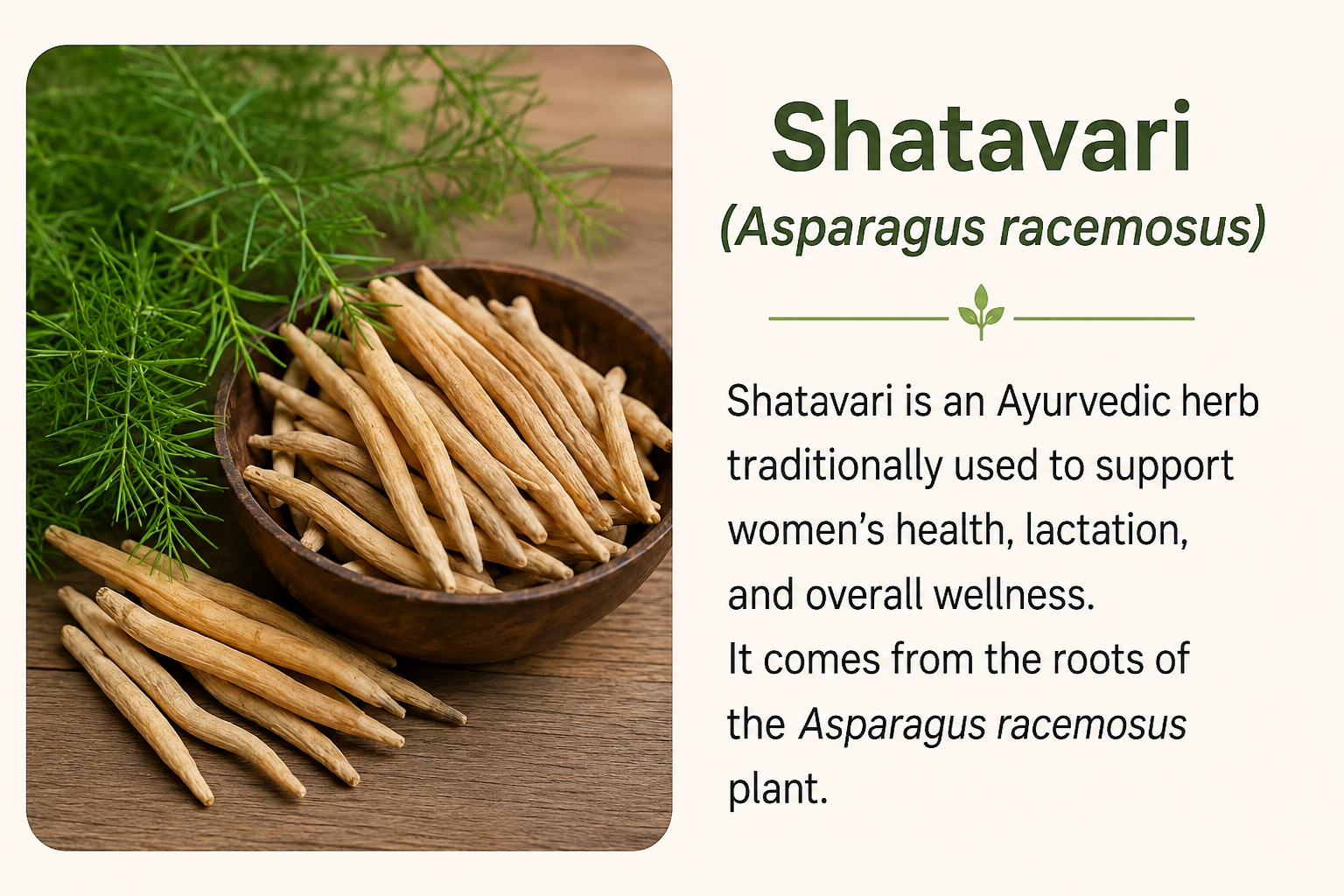
Shatavari is a popular Ayurvedic herb traditionally associated with women’s health, reproductive wellness, lactation, and general nourishment. If you searched for shatavari1, you are most likely looking for information about Shatavari, scientifically known as Asparagus racemosus. This traditional herb has attracted growing interest from modern researchers because of its potential role in breastfeeding support, menopause, and overall wellness.
But how much of what you hear about Shatavari is actually supported by research? How should it be taken? Are there side effects? Is it suitable for men and women?
This comprehensive guide explores Shatavari benefits, uses, dosage, side effects, safety, traditional Ayurvedic applications, and current scientific research so you can make a more informed decision.
Important: This article is for educational purposes and is not a substitute for professional medical advice. Herbal supplements may affect people differently and can interact with medicines.
What You’ll Learn
In this article, you will learn:
- What Shatavari is
- Shatavari’s traditional Ayurvedic uses
- Potential Shatavari benefits
- Shatavari and breastfeeding
- Shatavari and menopause
- Shatavari for women’s wellness
- Whether men can take Shatavari
- How to take Shatavari powder and capsules
- Dosage considerations
- Possible side effects
- Safety precautions
- How to choose a quality Shatavari supplement
- Frequently asked questions
What Is Shatavari?
Shatavari is an Ayurvedic medicinal herb obtained primarily from the roots of Asparagus racemosus, a climbing plant native to parts of Asia and traditionally used in Ayurvedic medicine.
The plant belongs to the Asparagaceae family. Its roots are the main part used in traditional preparations and are available today as powder, capsules, tablets, extracts, and other herbal formulations.
In Ayurveda, Shatavari is traditionally regarded as a nourishing and rejuvenating herb. It has a particularly strong connection with women’s health, reproductive wellness, and lactation.
The name Shatavari is sometimes translated in traditional contexts as relating to “one who possesses a hundred husbands,” reflecting its historical association with fertility and reproductive vitality.
However, modern scientific research does not support every traditional or commercial claim made about the herb.
This is an important distinction.
Traditional use provides valuable historical knowledge, but modern clinical evidence is needed to determine whether a particular health benefit is effective and safe.
Shatavari Benefits: What Does Research Say?
Shatavari has been studied for a range of potential health applications. However, the strength of evidence varies.
Some uses have a long history in Ayurveda, while others are still being investigated in laboratory or early human research.
Here are some of the most discussed potential benefits.
1. Shatavari May Support Breast Milk Production
One of the most recognized traditional uses of Shatavari is supporting breastfeeding and milk production.
In herbal medicine, a substance believed to support breast milk production is called a galactagogue.
Shatavari has traditionally been used by breastfeeding mothers for this purpose.
Recent research has increased interest in this traditional application. A 2025 randomized, double-blind, placebo-controlled study involving 120 postpartum women examined a specific Shatavari root extract. The researchers reported higher milk volume and earlier breast fullness in the Shatavari group over a 72-hour period compared with placebo.
These findings are promising, but they should not be interpreted as proof that every Shatavari powder or supplement will produce the same results.
The research involved a particular extract, a specific dose, and a relatively short study period.
Important considerations for breastfeeding mothers
Low milk supply can have many causes, including:
- Poor infant latch
- Infrequent feeding
- Ineffective milk transfer
- Certain medications
- Hormonal conditions
- Stress and fatigue
- Previous breast surgery
- Some medical conditions
Therefore, Shatavari should not be used as a substitute for professional lactation support.
If you are concerned about milk production, consider speaking with a qualified healthcare professional or lactation consultant.
Bottom line: Shatavari has promising traditional and emerging clinical evidence for lactation support, but more research is needed.
2. Shatavari May Support Menopausal Wellness
Menopause is another area where Shatavari is attracting scientific interest.
During menopause, changing hormone levels can contribute to symptoms such as:
- Hot flashes
- Night sweats
- Mood changes
- Sleep problems
- Vaginal dryness
- Reduced energy
- Changes in overall quality of life
A 2025 randomized study investigated Shatavari and a combination of Shatavari with Ashwagandha in women aged 45 to 65. The research reported improvements in several menopause-related measures, particularly among participants receiving the combination intervention.
However, the researchers also emphasized the need for additional research.
This means Shatavari may have potential as part of a broader approach to menopausal wellness, but it should not currently be viewed as a proven treatment for menopause.
A practical approach
Women experiencing menopause symptoms should consider:
- Tracking symptoms.
- Maintaining regular physical activity.
- Eating a balanced diet.
- Prioritizing sleep.
- Discussing persistent symptoms with a healthcare professional.
- Considering supplements only after evaluating their safety and suitability.
Bottom line: Early research is encouraging, but larger and longer clinical studies are required.
3. Shatavari and Women’s Wellness
Shatavari is often called a women’s wellness herb because of its long-standing traditional association with female reproductive health.
Traditional uses include support for:
- Menstrual wellness
- Reproductive health
- Postpartum recovery
- Lactation
- General nourishment
However, it is important not to confuse traditional use with proven treatment.
For example, claims that Shatavari can cure infertility, PCOS, or all hormonal problems are not supported by sufficient high-quality clinical evidence.
Women experiencing irregular periods, infertility, severe menstrual pain, or other persistent symptoms should seek an appropriate medical evaluation.
Shatavari may be considered a complementary wellness option in some situations, but it should not replace diagnosis or evidence-based treatment.
4. Shatavari May Have Antioxidant Properties
Plants contain numerous natural compounds that may have antioxidant activity.
Shatavari contains several phytochemicals that researchers have investigated for their biological properties.
Antioxidants are compounds that can help protect cells from oxidative stress.
However, there is an important difference between:
- Antioxidant activity observed in a laboratory
- Antioxidant effects demonstrated in humans
- Proven disease prevention
A laboratory study showing antioxidant activity does not automatically mean that taking Shatavari will prevent a specific disease.
More human research is needed to understand the real-world significance of these properties.
5. Shatavari May Support Digestive Wellness
Traditional Ayurvedic practice has used Shatavari as a nourishing herb that may support digestive health.
Some people take Shatavari as part of a broader wellness routine when experiencing occasional digestive discomfort.
However, Shatavari should not be used to self-treat serious or persistent digestive problems.
Seek medical advice if you experience:
- Persistent abdominal pain
- Blood in the stool
- Unexplained weight loss
- Severe diarrhea
- Repeated vomiting
- Difficulty swallowing
- Persistent heartburn
These symptoms may require proper medical evaluation.
6. Shatavari May Support General Vitality
In Ayurveda, Shatavari is traditionally associated with rejuvenation and nourishment.
Modern supplement users may take it with the goal of supporting:
- General wellness
- Vitality
- Recovery
- Stress management
- Overall nourishment
However, scientific evidence does not currently establish Shatavari as a guaranteed energy booster or performance-enhancing supplement.
If you experience persistent fatigue, it is better to investigate possible causes such as poor sleep, anemia, thyroid problems, nutritional deficiencies, stress, or other medical conditions rather than relying solely on an herbal supplement.
Shatavari Benefits at a Glance
| Potential Use | Traditional Interest | Current Evidence |
|---|---|---|
| Breastfeeding support | High | Promising but limited |
| Menopause wellness | High | Emerging |
| Women’s wellness | High | Limited |
| Digestive wellness | Traditional | Limited |
| Antioxidant activity | Yes | Mainly laboratory/preclinical |
| General vitality | Traditional | Insufficient |
| Male wellness | Traditional use exists | Limited |
The most important takeaway is that not all Shatavari benefits have the same level of scientific support.
How Does Shatavari Work?
Researchers have identified several groups of naturally occurring compounds in Asparagus racemosus.
These include:
- Steroidal saponins
- Shatavarins
- Flavonoids
- Polyphenols
- Other phytochemicals
Scientists are investigating how these compounds may interact with different biological processes.
Some research has explored possible hormonal and estrogen-like activity, which may help explain why Shatavari has traditionally been associated with women’s health.
However, the term “hormone balancing” is often used too broadly in supplement advertising.
The human endocrine system is highly complex. Hormones interact with one another through multiple systems involving the brain, thyroid, adrenal glands, ovaries, testes, and other organs.
Therefore, it would be inaccurate to claim that Shatavari can automatically “balance hormones” or correct every hormonal condition.
How to Take Shatavari
Shatavari is available in several forms.
Common forms include:
- Shatavari powder or churna
- Capsules
- Tablets
- Root extracts
- Liquid preparations
- Ayurvedic formulations
The best form depends on your personal preference and the quality of the product.
Step 1: Identify your goal
Ask why you want to use Shatavari.
Are you interested in:
- General wellness?
- Traditional women’s health support?
- Lactation support?
- Menopausal wellness?
Having a clear goal helps you make a more informed choice.
Step 2: Check the label
Look for:
- Botanical name
- Plant part used
- Amount per serving
- Extract ratio, if applicable
- Manufacturer information
- Batch number
- Expiry date
Step 3: Follow product directions
Do not assume that all Shatavari products have the same strength.
A concentrated extract and raw root powder are not necessarily equivalent.
Step 4: Consider your health history
If you have a medical condition or take prescription medication, discuss Shatavari with a qualified healthcare professional.
Step 5: Monitor your response
Stop using the product and seek advice if you experience unusual or persistent symptoms.
Shatavari Dosage: How Much Should You Take?
There is no single universally established dosage for every Shatavari product.
The appropriate amount depends on several factors:
- Powder versus extract
- Extract concentration
- Product formulation
- Intended purpose
- Individual health status
- Other medications
This is why simply copying a dosage from another person’s experience may not be appropriate.
Powder and extract are different
For example, 1 gram of raw root powder is not necessarily equivalent to 1 gram of a concentrated extract.
When choosing a product, pay attention to:
- Serving size
- Extract concentration
- Standardization information
- Manufacturer instructions
If you are using Shatavari for a specific health purpose, professional guidance is preferable to self-prescribing high doses.
Shatavari Side Effects
Although Shatavari is a natural herb, natural does not always mean risk-free.
Possible side effects may include:
- Gas
- Bloating
- Stomach discomfort
- Loose stools
- Nausea
- Headache
- Allergic reactions
The type and severity of side effects may vary from person to person.
Recent clinical research has generally reported favorable tolerability for the specific preparations studied, but these results cannot guarantee that every Shatavari product will be equally well tolerated.
Product quality also matters.
Contamination, inaccurate labeling, or poor manufacturing practices can create risks that are unrelated to the herb itself.
Who Should Be Careful With Shatavari?
Talk to a healthcare professional before taking Shatavari if you:
- Are pregnant
- Are breastfeeding
- Take prescription medicines
- Have a hormone-sensitive condition
- Take hormone-related medication
- Take diabetes medication
- Take diuretics
- Have kidney disease
- Have a known allergy to asparagus
- Have multiple chronic health conditions
Pregnancy
Pregnancy requires particular caution.
The fact that Shatavari has been traditionally used in Ayurvedic medicine does not automatically establish that every Shatavari preparation is safe during pregnancy.
Pregnant women should speak with an obstetrician or qualified healthcare professional before using herbal supplements.
Breastfeeding
Shatavari has a long history of traditional use during breastfeeding, and emerging research is encouraging.
However, individual circumstances vary.
A healthcare professional or qualified lactation consultant can help determine whether supplementation is appropriate.
Can Men Take Shatavari?
Yes.
Despite its strong association with women’s wellness, Shatavari is not exclusively a women’s herb.
Traditional herbal systems have used Shatavari more broadly for nourishment and general wellness.
Men may encounter Shatavari products marketed for:
- General vitality
- Digestive support
- Reproductive wellness
- General nourishment
However, evidence for specific male health claims remains limited.
Claims that Shatavari directly increases testosterone, builds muscle, or treats erectile dysfunction should be treated cautiously unless supported by high-quality clinical research.
Shatavari Powder vs Capsules: Which Is Better?
| Feature | Shatavari Powder | Shatavari Capsules |
|---|---|---|
| Traditional use | High | Moderate |
| Easy to mix | Yes | No |
| Convenience | Moderate | High |
| Taste | Strong herbal taste | Minimal |
| Dose consistency | Depends on product | Usually easier |
| Travel-friendly | Moderate | High |
Which should you choose?
There is no universal answer.
A high-quality Shatavari powder may be a better choice than a poorly manufactured capsule.
When choosing between products, focus on:
- Ingredient transparency
- Botanical identification
- Manufacturing quality
- Testing
- Clear labeling
- Reputable manufacturer
Convenience is important, but quality should come first.
How to Choose a Quality Shatavari Supplement
The herbal supplement market contains products with widely varying levels of quality.
Before buying Shatavari, check whether the product clearly identifies:
- Asparagus racemosus
- The plant part used
- Serving size
- Extract concentration
- Manufacturer
- Batch or lot number
- Expiry date
- Ingredient list
Look for companies that provide appropriate quality testing and transparent information.
Be cautious of products that promise:
- Guaranteed fertility
- Instant hormonal balance
- Permanent PCOS treatment
- Guaranteed breast enlargement
- Immediate weight gain
- “Zero side effects”
These types of claims should raise concerns.
A trustworthy supplement company should not promise impossible or medically unsupported outcomes.
Common Mistakes When Using Shatavari
Mistake 1: Assuming “natural” means completely safe
Natural substances can still cause side effects and interactions.
Mistake 2: Copying another person’s dosage
Different products have different concentrations.
Mistake 3: Ignoring medications
Herbal supplements may interact with prescription medicines.
Mistake 4: Treating symptoms without finding the cause
For example, irregular periods may result from many different conditions.
Taking an herb without investigating the underlying problem could delay appropriate treatment.
Mistake 5: Believing every online health claim
A product advertisement is not the same as scientific evidence.
Look for:
- Human clinical trials
- Peer-reviewed research
- Transparent labeling
- Qualified professional guidance
What Does Modern Research Actually Tell Us?
The current evidence on Shatavari can best be described as promising but still developing.
The strongest areas of current human research interest include:
- Lactation
- Menopausal wellness
- Women’s health
Other areas require more research, including:
- Fertility
- PCOS
- Male reproductive health
- Hormonal disorders
- Digestive conditions
- Long-term safety
Recent randomized clinical research has added new evidence to the discussion, but individual studies cannot establish that Shatavari is a cure or universally effective treatment.
The most responsible conclusion is that Shatavari is a traditional herb with interesting emerging research, but additional large, well-designed, long-term human studies are needed.
Quick Answer: Is Shatavari Worth Taking?
Shatavari may be worth considering as a complementary herbal supplement for some adults, depending on their health goals and individual circumstances.
The best approach is to:
- Identify your reason for taking it.
- Choose a reputable product.
- Understand whether you are taking powder or extract.
- Follow the recommended serving instructions.
- Check for possible drug interactions.
- Speak with a healthcare professional when appropriate.
- Never use it as a replacement for necessary medical treatment.
Frequently Asked Questions About Shatavari
What is Shatavari used for?
Shatavari is traditionally used for women’s wellness, reproductive health, lactation support, general nourishment, and digestive wellness. Modern research is investigating its potential role in lactation and menopause.
What are the main benefits of Shatavari?
Potential benefits include lactation support and menopausal wellness. Other claimed benefits, such as hormonal balance and fertility support, require more high-quality research.
Does Shatavari increase breast milk?
Some emerging research suggests that specific Shatavari extracts may support breast milk production. However, results cannot automatically be applied to every Shatavari product.
Is Shatavari safe?
Shatavari appears to be tolerated by many people, but side effects and interactions are possible. People with medical conditions or those taking medications should seek professional advice.
What are the side effects of Shatavari?
Possible side effects include gas, bloating, digestive discomfort, loose stools, nausea, headache, and allergic reactions.
Can men take Shatavari?
Yes. Shatavari is not exclusively for women. Men may use it traditionally for general nourishment and wellness, although research on specific male health benefits is limited.
Is Shatavari good for menopause?
Early research suggests potential benefits for menopausal wellness, but more large-scale studies are needed before firm conclusions can be made.
What is the correct Shatavari dosage?
There is no universal dosage for every product. The appropriate amount depends on whether you are using powder, capsules, or a concentrated extract.
Can pregnant women take Shatavari?
Pregnant women should consult a qualified healthcare professional before taking Shatavari. Safety cannot be assumed simply because the herb is traditionally used.
Can breastfeeding mothers take Shatavari?
Shatavari has traditionally been used to support lactation, and recent research is promising. However, breastfeeding mothers should consider professional guidance based on their individual circumstances.
Is Shatavari good for PCOS?
There is currently insufficient high-quality evidence to say that Shatavari treats or cures PCOS. People with PCOS should receive appropriate medical evaluation and care.
Does Shatavari balance hormones?
Shatavari may affect biological pathways related to women’s health, but “hormone balancing” is a broad term that is often overused in supplement marketing.
Which is better, Shatavari powder or capsules?
Neither is automatically better. The choice depends on product quality, concentration, convenience, and personal preference.
Can Shatavari be taken long-term?
Long-term safety data are limited compared with short-term research. If you plan to use concentrated extracts for an extended period, consult a healthcare professional.
Conclusion
Shatavari, scientifically known as Asparagus racemosus, is a traditional Ayurvedic herb with a long history of use, especially in women’s wellness, reproductive health, and lactation support. If your search for shatavari1 was intended to find information about Shatavari, the most important point is that this herb deserves a balanced view.
Traditional Ayurvedic knowledge provides an important foundation, while modern research is beginning to investigate some of its most popular uses. Recent human studies have produced encouraging findings in areas such as breastfeeding support and menopausal wellness, but the overall evidence is still developing.
Shatavari should therefore not be viewed as a cure-all.
If you are considering using it, focus on your specific health goal, choose a reputable product, understand the preparation and dosage, and consider possible interactions with medicines or existing health conditions.
Used thoughtfully and with appropriate professional guidance, Shatavari may have a place in a broader wellness routine. But good health decisions should always be based on a combination of traditional knowledge, scientific evidence, product quality, and individual medical needs.


