


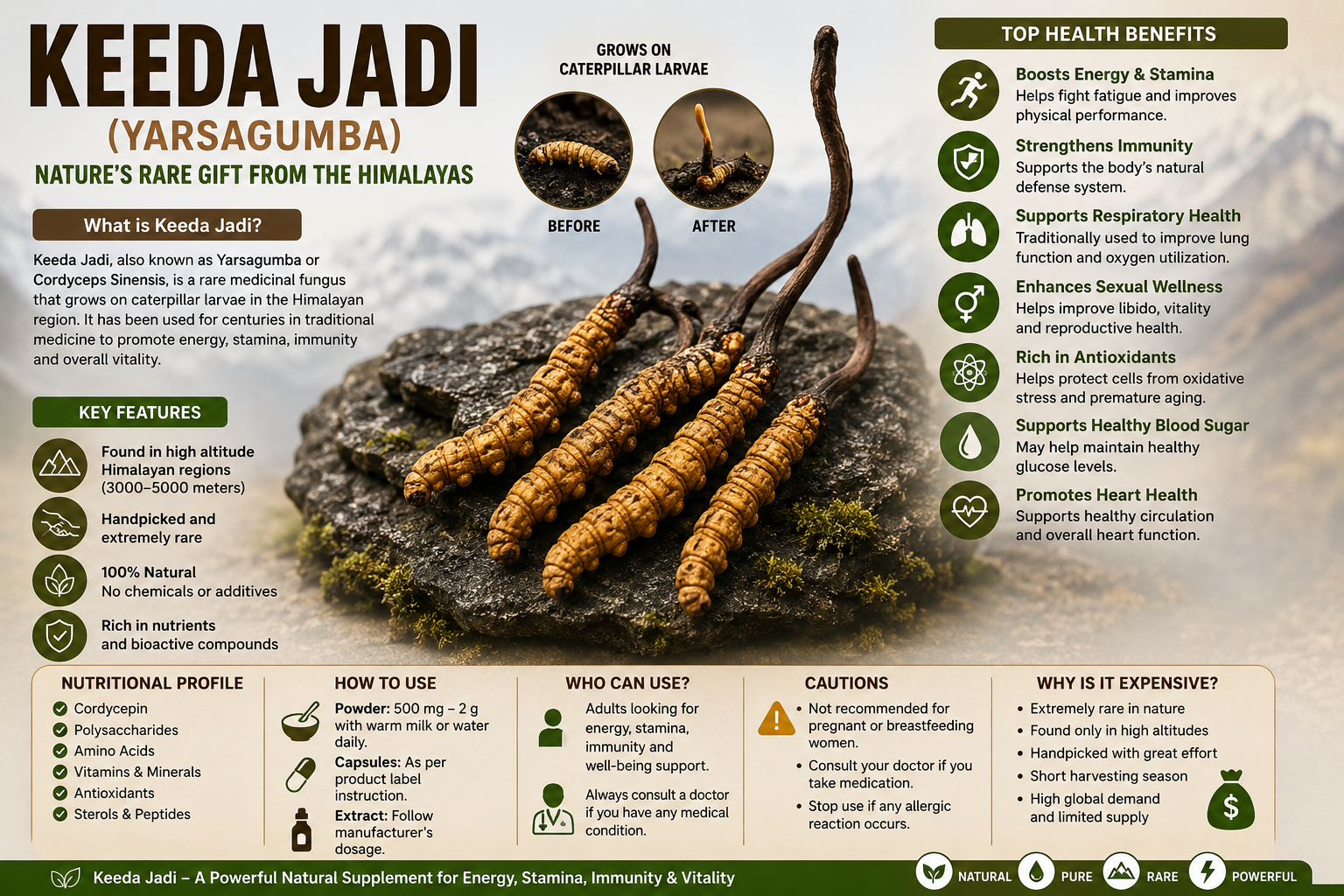
Keeda Jadi, also known as Yarsagumba or Cordyceps sinensis, is one of the world’s most valuable natural medicinal resources. Found in the high Himalayan regions of India, Nepal, Bhutan, and Tibet, this unique organism has been treasured for centuries in traditional medicine.
Often called the “Himalayan Viagra”, Keeda Jadi is famous for improving stamina, immunity, energy levels, and overall vitality. Due to its rarity and exceptional medicinal value, it commands an extremely high market price.
In this comprehensive guide, you’ll learn everything about Keeda Jadi—from how it forms and its health benefits to proper usage, precautions, and buying tips.
What You’ll Learn
- What is Keeda Jadi?
- How it is formed
- Health benefits
- Ayurvedic significance
- Scientific research
- Uses for men and women
- Side effects
- Dosage
- Price
- Original vs fake identification
- Frequently asked questions
What is Keeda Jadi?
Keeda Jadi (Cordyceps sinensis) is a rare medicinal fungus that grows on the larvae of ghost moth caterpillars in the Himalayan mountains at elevations above 3,000 meters.
During winter, the fungus infects a caterpillar living underground. As it grows, it gradually replaces the caterpillar’s internal tissues. In spring, a slender mushroom-like stalk emerges above the soil. This remarkable combination of fungus and caterpillar is harvested as Keeda Jadi.
Featured Snippet Definition (40–60 words)
Keeda Jadi, also called Yarsagumba or Cordyceps sinensis, is a rare medicinal fungus that grows naturally on caterpillar larvae in the Himalayan region. It has been used in traditional medicine for centuries to support energy, stamina, immunity, respiratory health, and overall vitality.
How Does Keeda Jadi Form?
The formation of Keeda Jadi is one of nature’s most fascinating biological processes.
Step-by-Step Process
- Ghost moth larvae live underground.
- Cordyceps fungal spores infect the larvae.
- The fungus slowly grows inside the caterpillar.
- During winter, the fungus consumes the host.
- In spring, a fruiting body emerges above the soil.
- Harvesters collect it by hand.
Because this process occurs only under specific environmental conditions, Keeda Jadi is extremely rare.
Nutritional and Bioactive Compounds
Keeda Jadi contains numerous bioactive compounds, including:
- Cordycepin
- Polysaccharides
- Amino acids
- Vitamins
- Minerals
- Sterols
- Antioxidants
- Nucleosides
- Peptides
These compounds contribute to its medicinal properties.
Health Benefits of Keeda Jadi
1. Boosts Energy Naturally
Keeda Jadi may improve the body’s ability to produce ATP (adenosine triphosphate), the primary energy molecule in cells. This can help reduce fatigue and support sustained energy.
Benefits
- Increased stamina
- Reduced tiredness
- Better endurance
- Improved physical performance
2. Supports Immune Function
Its polysaccharides and antioxidants may help regulate immune responses, potentially enhancing the body’s defense against infections.
Expert Tip
Individuals with autoimmune conditions should consult a healthcare professional before use, as immune-modulating effects may not be suitable for everyone.
3. Improves Athletic Performance
Some studies suggest Cordyceps may enhance oxygen utilization during exercise, making it popular among endurance athletes.
Possible benefits include:
- Better oxygen uptake
- Improved endurance
- Faster recovery
- Reduced muscle fatigue
4. Supports Respiratory Health
Traditionally, Keeda Jadi has been used to support lung function and ease respiratory discomfort. Preliminary research indicates it may help improve oxygen utilization, though more high-quality human studies are needed.
It has traditionally been used for:
- Mild cough
- Low energy
- General respiratory support
- High-altitude adaptation
5. May Enhance Sexual Wellness
Keeda Jadi has long been associated with supporting libido and reproductive health. Some animal and limited human studies suggest potential benefits, but strong clinical evidence is still limited.
Potential effects:
- Improved vitality
- Enhanced stamina
- Better overall well-being
Important: It should not be considered a proven treatment for erectile dysfunction or infertility. Consult a healthcare professional for persistent concerns.
6. Rich in Antioxidants
Antioxidants in Keeda Jadi help combat oxidative stress, which can contribute to aging and chronic disease.
Potential benefits:
- Cellular protection
- Healthy aging
- Reduced free radical damage
7. Supports Healthy Blood Sugar Levels
Early research suggests Cordyceps may influence glucose metabolism, but it is not a replacement for diabetes medication.
If you have diabetes or take blood sugar-lowering medication, consult your healthcare provider before using it.
8. May Support Heart Health
Some studies indicate Cordyceps may have positive effects on cholesterol and cardiovascular health, but more human research is required.
Potential benefits:
- Supports healthy circulation
- May help maintain healthy cholesterol levels
- Provides antioxidant support for cardiovascular wellness
Comparison Table
| Feature | Keeda Jadi | Shilajit | Ashwagandha |
|---|---|---|---|
| Natural Source | Fungus on caterpillar | Mineral resin | Herb |
| Main Benefit | Energy & stamina | Vitality | Stress support |
| Rich in Antioxidants | Yes | Yes | Yes |
| Adaptogenic Properties | Yes | Yes | Yes |
| Traditional Use | Tibetan & Himalayan medicine | Ayurveda | Ayurveda |
Ayurvedic Perspective
Although Keeda Jadi is not a classical Ayurvedic herb, it is used in Himalayan traditional medicine and is often incorporated into modern herbal wellness formulations.
It is commonly valued for supporting:
- Strength
- Endurance
- Recovery
- General vitality
- Overall wellness
Scientific Research on Keeda Jadi
Modern research has increased interest in Cordyceps sinensis (Keeda Jadi) because of its unique bioactive compounds, especially cordycepin, adenosine, and polysaccharides.
Laboratory and animal studies suggest that Cordyceps may have:
- Antioxidant properties
- Anti-inflammatory effects
- Immune-modulating activity
- Anti-fatigue potential
- Support for exercise performance
However, while early findings are promising, high-quality human clinical trials remain limited. More research is needed before making definitive medical claims.
Key Research Areas
| Research Area | Current Evidence |
|---|---|
| Energy & fatigue | Moderate evidence |
| Exercise performance | Moderate evidence |
| Immune support | Promising but limited |
| Antioxidant effects | Strong laboratory evidence |
| Blood sugar support | Early-stage research |
| Sexual wellness | Limited human evidence |
| Anti-aging | Experimental research |
Expert Note: Keeda Jadi should be viewed as a traditional wellness supplement rather than a proven treatment for any disease.
Uses of Keeda Jadi
Keeda Jadi has been used in Himalayan and traditional Asian medicine for centuries.
Common Uses
- Supporting daily energy
- Promoting physical stamina
- Helping recovery after exercise
- Supporting respiratory wellness
- Enhancing general vitality
- Supporting immune health
- Maintaining overall well-being
How to Use Keeda Jadi
The best method depends on the form you purchase.
1. Whole Keeda Jadi
Traditionally soaked in warm water or milk before consumption.
2. Powder
Can be mixed with:
- Warm milk
- Honey
- Herbal tea
- Lukewarm water
3. Capsules
The easiest and most consistent option for daily supplementation. Follow the dosage instructions provided by the manufacturer.
4. Extract
Often available as concentrated liquid drops or standardized extracts. Use only according to product directions.
Recommended Dosage
There is no universally accepted dosage because potency varies by product and preparation.
General wellness products commonly recommend:
| Form | Typical Daily Amount* |
|---|---|
| Powder | 500 mg–2 g |
| Capsule | As directed on label |
| Extract | Follow manufacturer’s instructions |
| Whole Keeda Jadi | Only under expert guidance |
*These are general ranges found in commercial products and traditional use—not official medical recommendations.
Best Practices
- Start with a lower dose.
- Take with food if it causes stomach discomfort.
- Stay hydrated.
- Avoid exceeding the manufacturer’s suggested amount.
Who Can Use Keeda Jadi?
It may be suitable for:
- Adults seeking general wellness
- Athletes looking for endurance support
- People with physically demanding lifestyles
- Individuals interested in traditional herbal supplements
Always consult a healthcare provider before use if you have an existing medical condition.
Who Should Avoid Keeda Jadi?
Avoid or seek medical advice before use if you are:
- Pregnant
- Breastfeeding
- A child
- Scheduled for surgery
- Taking blood-thinning medication
- Taking immunosuppressant drugs
- Allergic to mushrooms or fungi
Possible Side Effects
Although generally well tolerated in many users, Keeda Jadi may cause side effects in some individuals.
Possible Side Effects
- Mild stomach upset
- Diarrhea
- Dry mouth
- Nausea
- Dizziness
- Allergic reactions (rare)
Stop use and seek medical attention if you experience severe allergic symptoms.
Drug Interactions
Keeda Jadi may interact with certain medications, including:
- Blood thinners
- Diabetes medications
- Immunosuppressants
- Some blood pressure medicines
Always discuss supplementation with your healthcare provider if you take prescription medications.
Keeda Jadi for Men
Keeda Jadi is commonly marketed for male vitality.
Potential traditional uses include:
- Supporting physical stamina
- Helping reduce fatigue
- Promoting exercise recovery
- Supporting reproductive wellness
Important: There is insufficient evidence to conclude that it reliably treats erectile dysfunction or significantly increases testosterone.
Keeda Jadi for Women
Women also use Keeda Jadi as a wellness supplement.
Potential benefits may include:
- Daily energy support
- Immune support
- Recovery after exercise
- Antioxidant protection
Pregnant or breastfeeding women should avoid using it unless advised by a healthcare professional.
Original vs Fake Keeda Jadi
Because of its high value, counterfeit products are common.
How to Identify Genuine Keeda Jadi
Original
- Clearly visible caterpillar body
- Thin fungal stalk
- Natural earthy aroma
- Uniform appearance
- Sold by trusted suppliers
- Often accompanied by quality testing or sourcing information
Fake
- Plastic-like texture
- Artificial coloring
- Chemical smell
- Perfectly identical pieces
- Extremely low price
Buying from reputable, transparent sellers greatly reduces the risk of counterfeit products.
Why Is Keeda Jadi So Expensive?
Several factors contribute to its high price:
- Extremely rare in nature
- Harvested by hand
- Found only at high Himalayan altitudes
- Short harvesting season
- Strong international demand
- Limited natural supply
Keeda Jadi Price
The price varies depending on:
- Quality
- Origin
- Purity
- Harvest season
- Form (whole, powder, capsule, extract)
Whole wild-harvested Keeda Jadi can be extremely expensive, often costing thousands of dollars per kilogram in international markets. Standardized supplements are generally much more affordable.
How to Store Keeda Jadi
Proper storage helps preserve quality.
Storage Tips
- Keep in an airtight container.
- Store in a cool, dry place.
- Protect from direct sunlight.
- Avoid moisture.
- Keep away from children.
Common Mistakes to Avoid
Many people reduce the effectiveness of herbal supplements by making avoidable mistakes.
Avoid These Errors
- Buying from unknown sellers
- Assuming “more is better”
- Ignoring product quality
- Using expired supplements
- Expecting instant results
- Replacing prescribed medicines with herbal products
Expert Recommendations
To get the most from Keeda Jadi:
- Choose products from reputable brands.
- Look for third-party testing when available.
- Follow label instructions.
- Maintain a balanced diet.
- Exercise regularly.
- Get adequate sleep.
- Consult a healthcare provider before starting any new supplement.
Conclusion
Keeda Jadi, also known as Yarsagumba or Cordyceps sinensis, is one of nature’s most fascinating and valuable medicinal organisms. Its long history in traditional Himalayan medicine and growing scientific interest make it a popular wellness supplement for supporting energy, endurance, and overall vitality.
While early research is promising, it should not be viewed as a cure for disease. The greatest benefits come from purchasing authentic products, using them responsibly, and combining them with a healthy lifestyle.
If you’re considering adding Keeda Jadi to your routine, consult a qualified healthcare professional—especially if you have underlying medical conditions or take prescription medications.


