


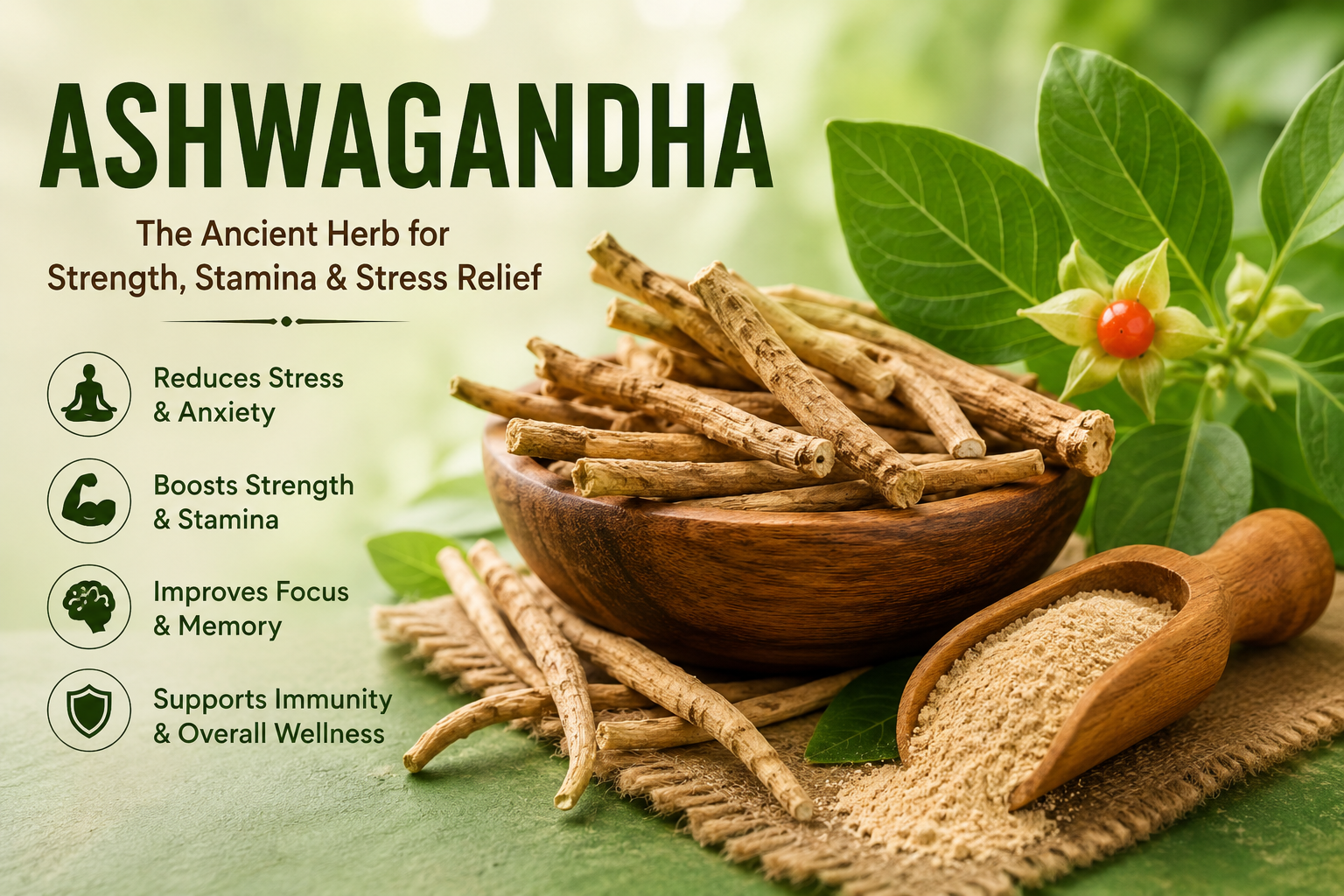
Ashwagandha (Withania somnifera) is a medicinal herb native to India, the Middle East, and parts of Africa. It belongs to the nightshade family and is considered one of Ayurveda’s most important rejuvenating herbs.
The word “Ashwagandha” means “smell of a horse,” symbolizing the strength and vitality the herb is believed to provide.
The roots are the most commonly used part of the plant, although the leaves and berries are also used in some traditional remedies.
Health Benefits of Ashwagandha
1. Helps Reduce Stress and Anxiety
Stress has become one of the biggest health concerns worldwide. Ashwagandha is best known for helping the body manage stress naturally.
Studies suggest that Ashwagandha may lower cortisol, often referred to as the “stress hormone.” Lower cortisol levels are associated with reduced anxiety and improved emotional well-being.
Benefits include:
- Reduced stress levels
- Better emotional balance
- Improved mood
- Increased relaxation
- Better resilience to daily challenges
2. Improves Sleep Quality
Many people experience poor sleep due to stress, anxiety, or irregular routines. Ashwagandha may help improve sleep quality by promoting relaxation and supporting the body’s natural sleep cycle.
People who take Ashwagandha regularly often report:
- Falling asleep faster
- Fewer nighttime awakenings
- Better sleep quality
- Feeling refreshed in the morning
3. Supports Brain Function
Ashwagandha contains bioactive compounds called withanolides, which may help protect brain cells from oxidative stress.
Research suggests it may support:
- Memory
- Learning ability
- Focus
- Concentration
- Mental clarity
Students and working professionals often use Ashwagandha to help improve productivity during mentally demanding tasks.
4. Boosts Physical Performance
Athletes and fitness enthusiasts commonly include Ashwagandha in their supplement routine.
Potential benefits include:
- Increased stamina
- Better muscle recovery
- Improved endurance
- Enhanced strength
- Reduced exercise-induced fatigue
Some studies have shown improvements in muscle mass and strength when Ashwagandha is combined with resistance training.
5. Supports Immune Health
A healthy immune system protects the body against infections and illness.
Ashwagandha contains antioxidant compounds that help fight free radicals and support immune function.
Possible immune benefits include:
- Improved resistance to infections
- Reduced inflammation
- Better recovery from illness
- Enhanced overall wellness
6. May Help Balance Blood Sugar
Early research suggests Ashwagandha may support healthy blood sugar levels by improving insulin sensitivity.
However, individuals with diabetes should consult their healthcare provider before taking it because it may enhance the effects of diabetes medications.
7. Supports Heart Health
Chronic stress affects cardiovascular health.
By helping reduce stress and inflammation, Ashwagandha may contribute to:
- Healthy blood pressure
- Better circulation
- Reduced oxidative stress
- Improved heart health
A heart-healthy lifestyle should also include regular exercise, a balanced diet, and routine medical checkups.
8. Improves Energy Levels
Unlike stimulants that provide temporary energy, Ashwagandha works by improving the body’s resilience to stress.
Many users report:
- Less fatigue
- Higher energy
- Better endurance
- Improved motivation
- Increased productivity throughout the day
Nutritional Compounds in Ashwagandha
| Compound | Benefit |
|---|---|
| Withanolides | Anti-inflammatory properties |
| Alkaloids | Nervous system support |
| Saponins | Immune support |
| Flavonoids | Antioxidant activity |
| Iron | Supports healthy blood production |
How Ashwagandha Works
Ashwagandha is classified as an adaptogenic herb.
Adaptogens help regulate the body’s response to stress by supporting the hypothalamic-pituitary-adrenal (HPA) axis.
This helps:
- Lower cortisol
- Improve recovery
- Enhance resilience
- Support hormonal balance
- Promote mental calmness
Who Can Benefit from Ashwagandha?
Ashwagandha may be suitable for:
- Working professionals
- College students
- Athletes
- Older adults
- People experiencing chronic stress
- Individuals seeking better sleep
- People looking to improve focus and energy
Common Forms of Ashwagandha
You can find Ashwagandha in several forms:
Powder
Traditionally mixed with warm milk or water.
Capsules
Convenient and easy to measure.
Tablets
Suitable for daily supplementation.
Liquid Extract
Fast absorption and flexible dosing.
Gummies
Popular among people who prefer an alternative to capsules.
Best Time to Take Ashwagandha
The ideal time depends on your health goals.
| Goal | Best Time |
|---|---|
| Stress relief | Morning |
| Better sleep | Evening |
| Workout performance | Before exercise |
| General wellness |
ow to Take Ashwagandha
Ashwagandha can be consumed in several ways depending on your preferences.
1. Capsules
Capsules are convenient, easy to carry, and provide a standardized dose.
2. Powder
Mix Ashwagandha powder with:
- Warm milk
- Water
- Smoothies
- Herbal tea
3. Tablets
Suitable for individuals who prefer a simple daily supplement.
4. Liquid Extract
Liquid extracts are quickly absorbed and allow flexible dosing.
Ashwagandha for Men
Ashwagandha has become a popular herbal supplement among men due to its potential role in supporting overall health and vitality.
Potential Benefits
- Supports healthy testosterone levels
- May improve muscle strength
- Enhances exercise recovery
- Supports reproductive health
- Helps manage stress
- May improve energy levels
Many athletes include Ashwagandha as part of a balanced nutrition and fitness program.
Ashwagandha for Women
Women also use Ashwagandha to support physical and mental well-being.
Possible Benefits
- Helps reduce stress
- Supports healthy sleep
- May improve energy
- Supports hormonal balance
- Promotes emotional wellness
- Helps improve concentration
Women who are pregnant or breastfeeding should avoid taking Ashwagandha unless advised by a qualified healthcare provider.
Scientific Research on Ashwagandha
Modern research has explored the effects of Ashwagandha in several areas of health.
Studies have suggested potential benefits for:
- Stress management
- Anxiety reduction
- Sleep quality
- Exercise performance
- Cognitive function
- Inflammation
- Immune support
Researchers believe these effects are largely due to naturally occurring compounds called withanolides, which possess antioxidant and anti-inflammatory properties.
Although many results are promising, more large-scale clinical trials are needed to fully understand the long-term effectiveness and safety of Ashwagandha.
Possible Side Effects of Ashwagandha
Ashwagandha is generally considered safe for most healthy adults when taken in recommended amounts. However, some individuals may experience mild side effects.
Common Side Effects
- Upset stomach
- Nausea
- Diarrhea
- Drowsiness
- Headache
These side effects are usually temporary and often improve after reducing the dosage or taking the supplement with food.
Who Should Avoid Ashwagandha?
Certain individuals should seek medical advice before using Ashwagandha.
Avoid or Use with Caution If You:
- Are pregnant
- Are breastfeeding
- Have autoimmune disorders
- Have thyroid disease
- Take sedatives
- Take diabetes medications
- Take blood pressure medicines
- Have scheduled surgery
Always consult your healthcare provider before starting any herbal supplement.
Ashwagandha vs. Ginseng
| Feature | Ashwagandha | Ginseng |
|---|---|---|
| Traditional Medicine | Ayurveda | Traditional Chinese Medicine |
| Primary Benefit | Stress relief | Energy enhancement |
| Main Compounds | Withanolides | Ginsenosides |
| Sleep Support | Excellent | Moderate |
| Anxiety Relief | Excellent | Moderate |
| Physical Performance | Good | Excellent |
Both herbs have unique benefits and should be selected based on individual health goals.
How to Choose the Best Ashwagandha Supplement
Not all supplements are created equal. Consider these factors before purchasing.
Look For:
- Standardized root extract
- Third-party testing
- Clear ingredient list
- No unnecessary fillers
- Reputable manufacturer
- Good customer reviews
Avoid:
- Artificial additives
- Hidden ingredients
- Extremely high doses
- Unverified health claims
Common Myths About Ashwagandha
Myth 1: Ashwagandha Works Overnight
Fact: Most people notice benefits after several weeks of consistent use.
Myth 2: More Is Better
Fact: Taking excessive amounts may increase the risk of side effects without providing additional benefits.
Myth 3: It Has No Scientific Evidence
Fact: Numerous clinical studies have investigated Ashwagandha, although more research is still needed.
Myth 4: Everyone Can Take Ashwagandha
Fact: Certain groups, including pregnant women and people with specific medical conditions, should avoid or use it only under medical supervision.
Frequently Asked Quick Answers (Featured Snippet Ready)
What is Ashwagandha?
Ashwagandha is an adaptogenic herb used in Ayurvedic medicine to help the body manage stress, improve sleep, support immunity, and promote overall wellness.
What are the main benefits of Ashwagandha?
The main benefits include:
- Stress reduction
- Better sleep
- Increased energy
- Improved focus
- Enhanced athletic performance
- Immune support
Is Ashwagandha safe?
Yes, Ashwagandha is generally safe for healthy adults when taken at recommended doses. People with certain medical conditions should consult a healthcare professional before use.
How long does Ashwagandha take to work?
Many users begin noticing improvements within 2–8 weeks of consistent daily use, although results vary depending on individual health goals and dosage.
Expert Tips for Best Results
- Take Ashwagandha consistently.
- Pair it with a healthy diet.
- Exercise regularly.
- Get adequate sleep.
- Stay hydrated.
- Avoid excessive alcohol consumption.
- Practice stress-management techniques such as meditation or yoga.
Conclusion
Ashwagandha (also spelled Ashvavgandha or Ashvagandha) is one of the most valued herbs in Ayurvedic medicine and has gained global recognition for its potential to support stress management, sleep, cognitive health, energy levels, and overall well-being.
While current research is encouraging, Ashwagandha should not be viewed as a cure for any disease. The best results come from combining it with a healthy lifestyle, balanced nutrition, regular exercise, and proper medical guidance when needed.
If you are considering adding Ashwagandha to your daily routine, choose a high-quality supplement, follow the recommended dosage, and consult a healthcare professional if you have existing health conditions or take medications.


