


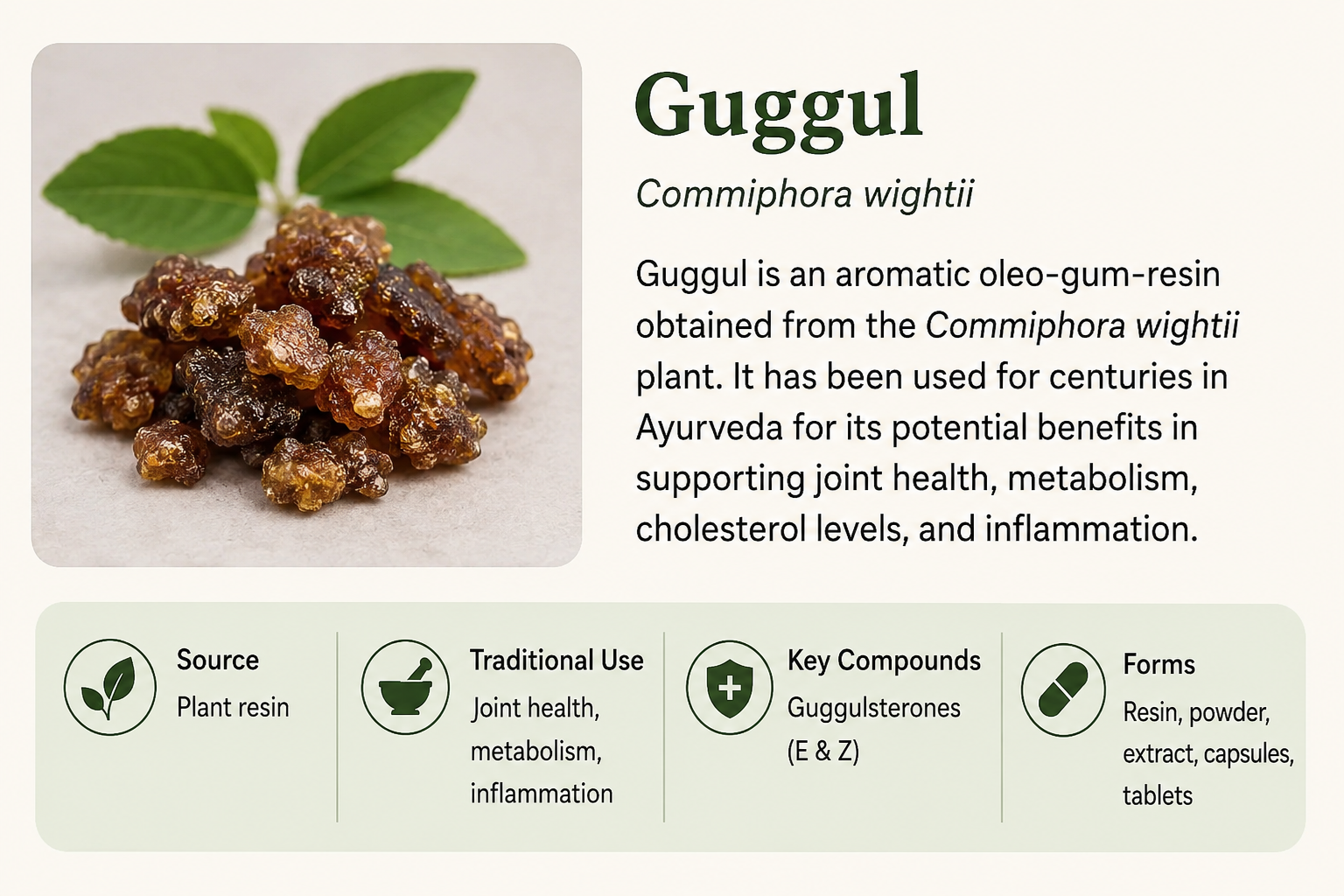
Guggul is a famous Ayurvedic resin that has been used in traditional Indian medicine for centuries. Also known as Guggulu or Guggal, this aromatic natural substance comes from certain Commiphora plants and is widely used in traditional herbal preparations.
In modern times, Guggul has gained attention for its potential connection with cholesterol management, inflammation, joint health, metabolism, skin wellness, and weight management. Scientists have also studied special compounds in Guggul called guggulsterones, which may influence several biological pathways.
However, not every claim made about Guggul has been proven by modern clinical research. Some benefits are based mainly on traditional Ayurvedic use, while others have been explored in laboratory and human studies with mixed results. This complete guide explains what Guggul is, its traditional uses, potential benefits, guggulsterones, dosage considerations, side effects, safety precautions, and what scientific research says about this traditional Ayurvedic herb
Guggul is a famous Ayurvedic resin that has been used in traditional Indian medicine for centuries. Also known as Guggulu or Guggal, this aromatic natural substance comes from certain Commiphora plants and is widely used in traditional herbal preparations.
In modern times, Guggul has gained attention for its potential connection with cholesterol management, inflammation, joint health, metabolism, skin wellness, and weight management. Scientists have also studied special compounds in Guggul called guggulsterones, which may influence several biological pathways.
However, not every claim made about Guggul has been proven by modern clinical research. Some benefits are based mainly on traditional Ayurvedic use, while others have been explored in laboratory and human studies with mixed results. This complete guide explains what Guggul is, its traditional uses, potential benefits, guggulsterones, dosage considerations, side effects, safety precautions, and what scientific research says about this traditional Ayurvedic herb


